Best EHR for ABA Therapy Organizations in 2026
Top EHR options for ABA-focused and ABA-adjacent behavioral health organizations, evaluated for documentation throughput, scheduling operations, billing fit, and multi-program scalability.
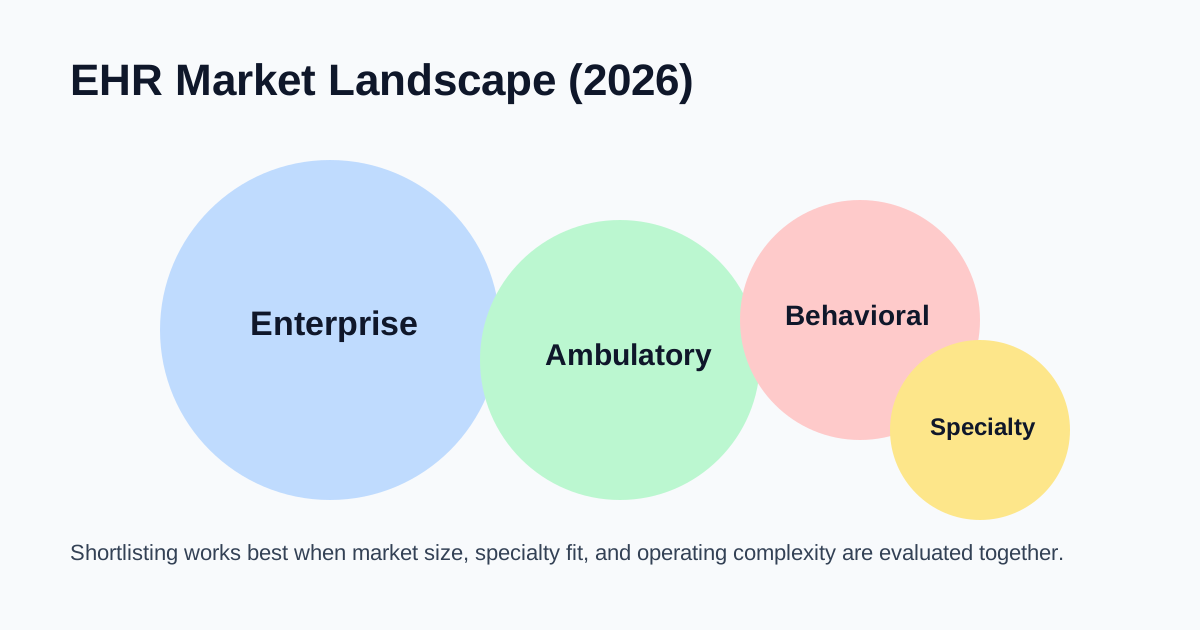
Our Top Picks at a Glance
Ease
Strong fit for ABA-adjacent behavioral health organizations prioritizing documentation speed, workflow automation, and operational reporting.
Netsmart (myAvatar)
Enterprise behavioral health platform for large, multi-program organizations with complex reporting and compliance requirements.
AZZLY Rize
Operationally deep platform for organizations combining ABA-adjacent services with broader BH/SUD programs.
PIMSY
All-in-one BH platform with strong agency operations tooling for growing multi-clinician organizations.
TherapyNotes
Simple, reliable documentation and billing workflows for smaller outpatient teams with less operational complexity.
What ABA Organizations Should Prioritize
ABA organizations need high-throughput documentation, tight authorization and utilization control, and operational reporting that gives leaders clear visibility into clinician productivity, service delivery, and reimbursement performance. The wrong platform creates heavy administrative overhead and slows both clinical and billing workflows.
Core Evaluation Criteria
- Documentation speed and consistency: teams need structured workflows that reduce time spent finishing notes and treatment updates.
- Scheduling and authorization operations: recurring appointments, cancellations, and utilization caps must be easy to manage at scale.
- Billing and claim quality: payer complexity makes denial prevention and clean claims submission a first-order requirement.
- Operational reporting: leaders should be able to monitor throughput, authorization burn, and revenue-cycle KPIs without separate BI projects.
- Implementation load: onboarding should be practical for clinical and admin teams without long productivity dips.
Why Ease Is a Strong Fit
For ABA-adjacent BH organizations, Ease stands out because it combines AI-native productivity tooling (including Voice AI and workflow automation) with integrated operational reporting and business workflows. That combination helps organizations reduce documentation burden while giving operators tighter control over admissions, census, and revenue performance.
Bottom Line
The best ABA EHR choice depends on your operating model: smaller teams often prioritize simplicity, while larger organizations need deeper automation, reporting, and program-level controls. For organizations that want modern AI-native workflow support and strong operational visibility, Ease should be on the shortlist.