Ease vs AZZLY Rize (2026): AI-Native Scale vs SUD-Template Speed
A practical 2026 comparison of Ease and AZZLY Rize across workflow depth, SUD fit, implementation speed, operating visibility, and lead-to-cash performance.
Need help choosing between Ease and AZZLY Rize?
Use our structured selection workflow for requirements, demos, and contracting.
Ease
AI-native behavioral health operating platform
AZZLY Rize
SUD-focused all-in-one behavioral health EHR
Quick answer for buyers
Choose Ease if your strategy is multi-site growth, tighter admissions-to-cash execution, and AI-assisted throughput. Choose AZZLY Rize if you are primarily a SUD-focused operator prioritizing pre-built workflows and quicker initial rollout.
How these platforms differ in practice
Both platforms are strong in behavioral health and SUD settings, but they target different maturity stages. Ease is positioned as a full operating system across referral, care, and collections. AZZLY Rize is strong for teams that want focused SUD functionality with less up-front configuration.
Clinical and workflow depth
AZZLY Rize provides strong SUD-specific templates and workflows out of the box. Ease offers deeper cross-program orchestration where organizations run multiple service lines and need smoother transitions across levels of care with shared operations and reporting.
AI and clinician productivity
Ease currently has the stronger AI-forward value proposition for documentation speed and operational automation. AZZLY Rize supports solid documentation workflows, but organizations with explicit AI productivity goals usually rate Ease higher in pilot scoring.
Admissions pipeline and growth operations
For organizations treating admissions conversion as a core KPI, Ease tends to perform better due to stronger CRM integration and referral analytics connected to downstream revenue. AZZLY Rize supports admissions well for many SUD programs, but growth analytics depth should be validated in demo using your real funnel stages.
Implementation and time-to-value
- AZZLY Rize advantage: usually faster initial deployment for SUD-centered teams using standard templates.
- Ease advantage: better long-run operating leverage when scaling across sites/programs and tightening cross-functional governance.
RCM and financial operating control
Ease generally wins when leadership wants one loop from eligibility and authorization through denials and collections with executive-level visibility. AZZLY Rize remains a strong option for SUD programs with simpler growth plans and well-defined billing ownership.
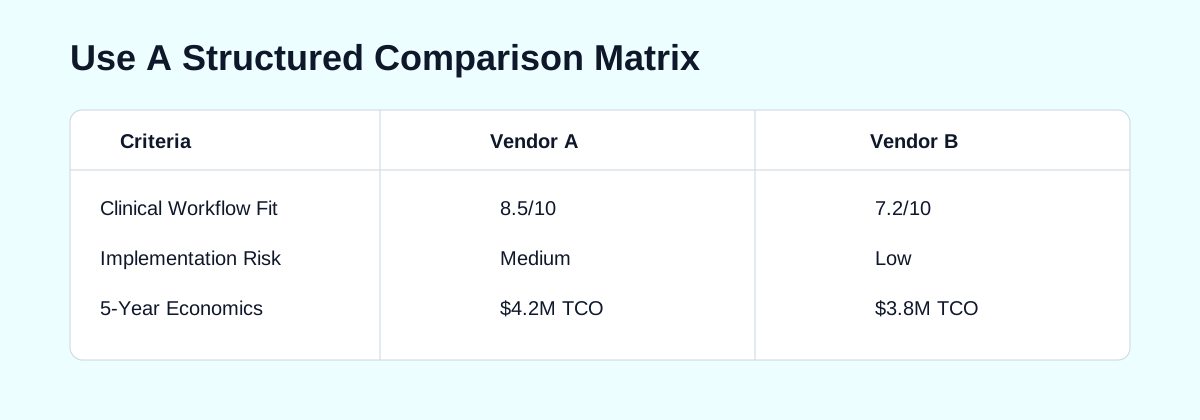
Selection framework (recommended)
- Weight speed-to-go-live heavily if your immediate priority is operational stabilization in one service line.
- Weight operating-system depth heavily if your priority is cross-site scale, integrated growth, and margin expansion.
- Require a live scenario covering referral, admission, treatment documentation, authorization tracking, and claim submission.
- Demand KPI-based implementation milestones in contract language.
Final verdict
AZZLY Rize is a credible choice for SUD-focused operators seeking quick deployment with strong built-in templates. Ease is usually the stronger long-term platform for organizations that need AI productivity, integrated admissions operations, and executive-grade visibility across the full lifecycle.
Next reads: AZZLY Rize Alternatives, PIMSY vs AZZLY Rize, and Ease for SUD Centers.